From Dyads to Systems: Advanced IPF Skills for Groups and Families: From Dyads to Systems: Advanced IPF Skills for Groups and Families
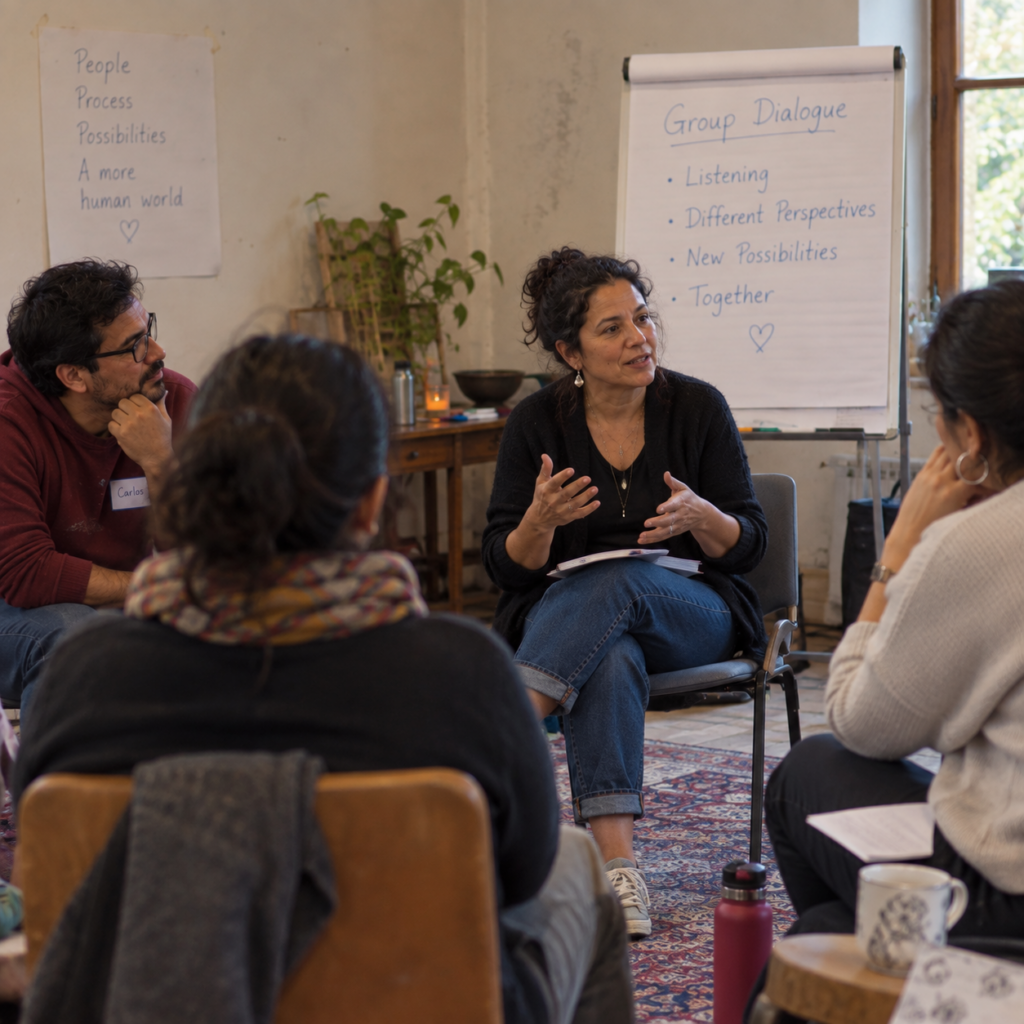
Ready to take your Imago Professional Facilitator skills beyond the dyad? In Part 2 of the Advanced Training we move into the exciting and more complex world of triads, groups and families – where relationships, roles, alliances and emotions interact in new ways.
We begin with the triad, the smallest unit in which group dynamics emerge. You will learn to recognize triangulation, coalitions and exclusion – and develop the capacity to hold a clear “third position” without becoming the judge, rescuer or problem-solver. From there we move into group facilitation: understanding group development, creating safety and resonance, clarifying the mandate, and working with the four levels of a group problem. Presence, self-differentiation and regulation remain central throughout.
And again, we will practice! Participants step into the facilitator role themselves and work with methods such as Communologue, Communolution, sociometry, regulation and centering practices, and the Imago Reflecting Team. We then extend these principles into family and intergenerational work, exploring attachment, roles, regulation, belonging and differentiation across generations.
- Develop triadic competence and learn to recognize and work with triangulation, coalitions and exclusion.
- Understand groups as relational systems with developmental tasks, emotional climates, roles and patterns.
- Strengthen your capacity to clarify goals, hold boundaries and avoid secondary triangulation.
- Expand your Imago practice into group, family and intergenerational settings with practical dialogue formats.
- Recognize when a dyadic conflict has become triangulated and respond without taking sides.
- Facilitate groups with greater awareness of safety, resonance, development, regulation and group identity.
- Apply advanced group methods including Communologue, Communolution, sociometry and Reflecting Team processes.
- Use Imago principles to support families and generations in clarifying roles, strengthening connection and increasing differentiation.